
Then came the applause. It wasn't thunderous. It wasn't a theater. But it was clear, prolonged, and incisive.
Nathan stood frozen near the service entrance. Vanessa stared at her plate.
Later, several guests approached me discreetly. A staff supervisor thanked me for clarifying the rules. An older lady from management shook my hand and said, "Some rules are personal even before they become necessary."
This meant more than just applause.
Nathan intercepted me near the atrium exit late at night. Vanessa hovered behind him, pale and stiff.
"That speech was directed at me," he said.
I adjusted the white coat on my arm. "If it fits, it's your choice."
Her eyes gleamed. "You were always good at appearing noble while being cruel."
The old Clara might have tried to prove she wasn't cruel. Perhaps she would have softened, explained, and given him space to feel less exposed. The woman standing in the atrium no longer tried to appear impartial in the face of injustice.
“Cruelty told me you were abroad while my parents watched you and Vanessa disembark,” I said. “Politics is what happens afterward.”
Vanessa closed her eyes for a moment.
Nathan had no answer.
I left through the glass doors, leaving him in a room where I was polite enough not to yell and honest enough not to protect him.
The separation became official in early spring. It wasn't like in the movies. There were signatures, diaries, inventories, and the awkward practical work of dividing a life after the emotional truth had already been severed.
Nathan arrived at meetings with different expressions. Regretful one day. Indignant the next. Exhausted when neither worked. He tried to claim that he had contributed to my social visibility, a phrase that was not well received in the room. My representative placed a list of my family's assets, philanthropic projects, and airport responsibilities on the table without reading it aloud.
Nathan remained silent for several minutes.
He tried to argue that the house had been our marital home and therefore should remain accessible until the conclusion of the legal process. I presented the purchase documents and the contract he had signed before the wedding, joking that paperwork wasn't romantic at all.
Details gain more meaning when they protect the person who trusted them.
Vanessa, perhaps tired of hearing his version of events, confirmed in writing that their relationship had been personal for months. She didn't ask anything in return. This made me respect her gesture a little more.
By this point, she had already lost much of what she hoped to achieve. Luxury travel brands stopped inviting her. Her online audience grew briefly, but then cooled off. She started posting fewer photos. Once, months later, she messaged me saying she was leaving town and that she hoped to become the kind of woman who didn't confuse being chosen with being valuable.
I read it but didn't reply.
Some lessons must be learned without applause from the person harmed by the mistake.
Nathan moved into a furnished apartment near the office. A mutual friend mentioned it casually and later apologized. To my surprise, I felt no pleasure in it. Nathan hadn't become helpless or broken. He had simply become ordinary in ways that his pride found unbearable.
No borrowed hallways. No wife tidying the rooms. No family name subtly elevating his status while he pretended the position belonged to him.
That was enough.
One Saturday, I took my parents back to the airport for their flight home. Their trip had taken longer than planned because they didn't want to leave me alone so soon. I didn't complain. Their presence had brought more tranquility to the house, filling it with books, tea, undercooked pasta, and the slight irritation of people who love you enough to rearrange your closets without permission.
This time, at Terminal 4, we went to the boarding area.
My father carried the ceramic rooster in his hand luggage, despite my warning that security might question his good taste. My mother hugged me near the entrance and held me a little longer than usual.
"You don't need to be strong every minute," she said.
"I know," I whispered.
Now I knew.
Strength wasn't just the impassive expression upon arrival. That was control, useful and temporary. Strength was also telling the truth. Changing the locks. Having dinner. Laughing at an absurd memory. Sleeping alone without confusing silence with abandonment.
Then my father hugged me.
"If he calls," he said, "I can answer in Portuguese and confuse him."
I laughed, and he seemed pleased with himself.
After they passed through security, I stayed behind the barrier until they were out of sight. A year earlier, perhaps I would have felt alone watching them leave. Now, I felt sad, yes, but not insecure.
There is a difference.
Sadness can sit next to you in the car.
Unsafe driving.
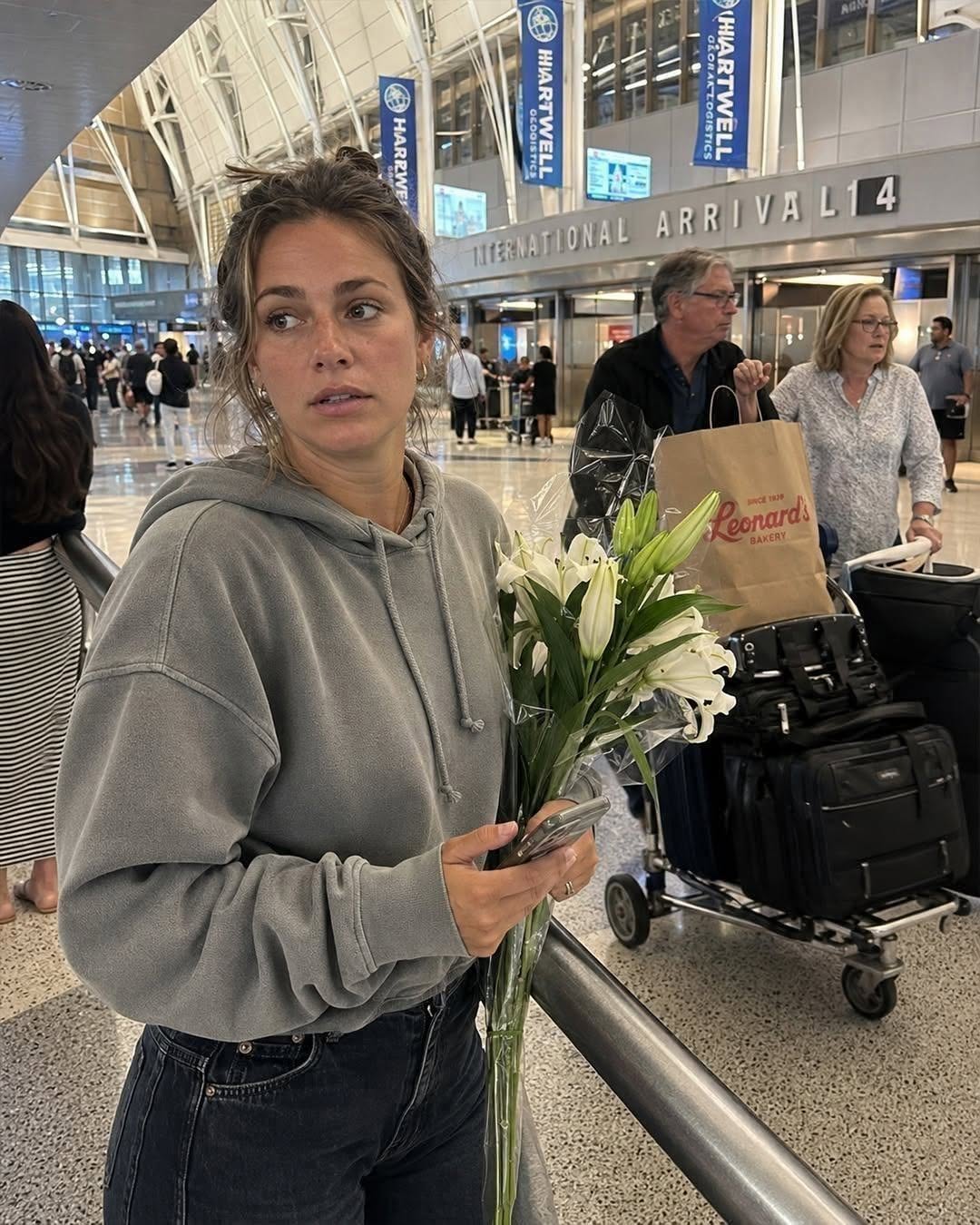
Before leaving, I went down to the arrivals level. I found the place where I had stood, with lilies in my hand. The barrier was the same. The panel above the doors indicated the different flights. People waited with flowers, balloons, tired smiles, and nervous hands.
I stood there in silence for a minute.
I didn't see Nathan.
I didn't see Vanessa.
I saw the place where I learned that betrayal, when exposed, doesn't have to become the center of the rest of your life. It can become a boundary. Before that door. After that door.
My phone vibrated.
A message appeared from an unknown number.
I miss us.
I analyzed the words. They were almost beautiful, if I ignored the person who had sent them. People often miss what they could control more than what they loved. Nathan missed the version of us where I waited at home, accepted explanations, gave him dignity, and allowed his borrowed privileges to seem deserved.
I typed one last reply.
I miss myself more.
So I blocked the number and went out into the bright spring light.
Six months later, Hartwell International Airport opened the new family reception wing. The project had been planned long before Nathan's choices became a particular storm, but policy changes gave it new meaning. The wing included quiet seating for elderly travelers, a children's area near arrivals, clearer signage, and a small support desk for families with complicated travel days.
The opening ceremony was modest. No red carpet. No pompous speeches. The employees stood beside the airport leaders while children played on their parents' laps. I wore a light blue suit and carried no flowers. I had learned that I didn't need props to prove I belonged there.
During the ribbon-cutting ceremony, a boy ran through the arrivals hall toward his grandmother, who dropped her bag and bowed with open arms. The entire crowd was moved. I felt a lump in my throat.
Airports can be cruel. Yes. They can expose lies under merciless lights. But they can also harbor this: a child running towards love without doubt, an elderly lady laughing with her arms raised, strangers smiling because reunion is one of the few public joys that no one needs to explain.
After the ceremony, reporters asked about the new access policy. I spoke about responsibility, protecting the staff, and the dignity of the travelers. I didn't mention Nathan. His name had no place in the new wing.
Near the service counter, I noticed Vanessa standing in the distance, wearing a simple gray coat. Her hair was shorter. No flashy bag. No camera in hand. For a moment, I considered leaving through another door.
Then she approached slowly and stopped a few meters away.
"I'm not here to cause a scandal," she said.
I waited.
She held out an envelope. "These are the last documents I had. I should have sent them sooner."
I picked it up, but I didn't open it.
Vanessa's face looked different without the constant effort to be admired. She was still beautiful, but less expressive.
"I saw the new policy," she said. "It's good."
I nodded.
She swallowed hard. "Anyway, I'm sorry for turning your worst moment into a victory."
The apology wasn't perfect. Perfect apologies rarely come from imperfect people. But he described the hurt more honestly than I expected.
I looked at her and didn't see a rival, nor a symbol, but rather a woman who mistook the humiliation of another woman for proof of her own worth.
"Don't build your life around the idea of being chosen by a man who needs to hide you," I said.
Her eyes filled with tears. She nodded once and left.
I didn't forgive her out loud.
I didn't need to.
CONTINUE READING...>>
To see the complete cooking instructions, go to the next page or click the Open (>) button and don't forget to SHARE it with your friends on Facebook.