
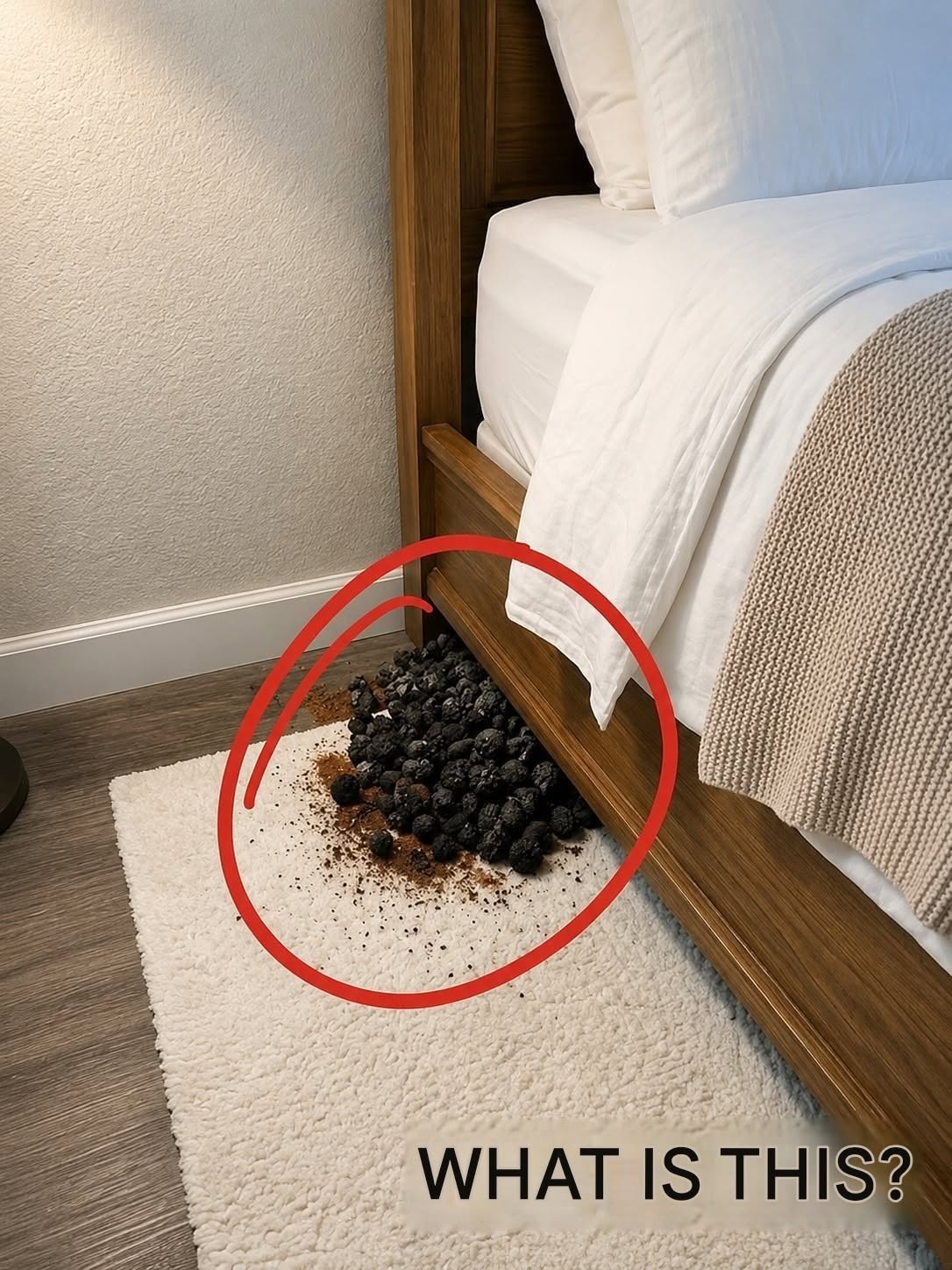
Its size and shape;
its exact location;
whether it reappears after cleaning;
whether it changes over time.
Possible causes of the black pile:
1. Accumulated dust and lint.
The simplest explanation is usually the correct one. Bedrooms naturally accumulate particles from clothing, bedding, skin cells, pet hair, or outdoor dust. When air from fans or air conditioning systems pushes these particles into corners, they can form surprisingly dark clumps. If the material is soft, fluffy, and easily dispersed, it is most likely ordinary dust.
2. Deterioration of rubber, foam, or latex.
Many modern furniture items contain synthetic materials that degrade over time. Mattress supports, protective legs, foam mattress toppers, or under-bed organizers may shed small, dark particles as they age, especially when exposed to heat or humidity.
3. Pet Activity:
Dogs and cats track dirt, chewed-up toys, fur, and other grime from outside. Sometimes they accumulate these materials without the owner noticing until they form a visible pile. Checking nearby toys can help determine the source.
4. Evidence of insects.
Some insects, such as cockroaches, carpet beetles, termites, or ants, leave behind droppings that can be mistaken for coffee grounds, peppercorns, or small dark pellets. If the pile constantly reappears after cleaning, it's worth inspecting more closely.
5. Bed Frame Wear and Tear:
Wooden, metal, or composite frames also deteriorate. Peeling varnish, rust, worn coatings, or wood particles can fall to the floor due to gravity. If the pile is located directly beneath a specific section of the furniture, inspecting it may provide the answer.
6. Deposits in ventilation grilles.
Air conditioning and heating move particles throughout the house. In some cases, the drafts concentrate dark dust composed of fibers, soot, and environmental pollutants in specific areas, such as bed legs or corners.
7. Candle soot or smoke.
Frequent use of candles, fireplaces, or certain heating systems can generate soot particles that settle on surfaces. While small amounts are not usually dangerous, excessive buildup could indicate ventilation problems.
Could it be mold?
Mold is a common concern. However, it usually grows attached to surfaces, not in isolated piles on the floor. Signs like a musty smell, stains on walls, or leaks can reinforce this suspicion. In most cases, dark piles have causes other than mold.
How to investigate safely
When faced with a discovery of this type, it is advisable to act methodically:
Photograph the pile before touching it to have a visual record.
Check nearby areas: bed frame, mattress, baseboards, vents, and furniture legs.
Clean the area thoroughly.
Monitor the area over the next few days to see if the residue reappears.
Consult a professional if you suspect pests or structural damage.
Common mistakes upon discovery:
Many people completely ignore the find, others jump to alarmist conclusions influenced by internet theories, and some clean everything before examining it, losing valuable information. The ideal approach is a middle ground: observe, document, and then act.
To see the complete cooking instructions, go to the next page or click the Open (>) button and don't forget to SHARE it with your friends on Facebook.